Costco Sourdough Bread Bowls: Everything You Need to Know
If you've spotted a stack of hefty, round sourdough loaves in the Costco bakery and wondered whether they're meant for slicing or scooping, you've found Costco's popular sourdough bread bowls. They're a warehouse-club favorite every fall and winter, and for good reason — a good bread bowl elevates a plain bowl of chili or clam chowder into something that feels like a restaurant meal. Below is what actually matters if you're deciding whether to grab a pack: where to find them, their ingredients, cost, and how to get the most out of every loaf.
- What Makes Costco's Sourdough Bread Bowls Unique?
- Where to Find Costco Sourdough Bread Bowls In-Store
- Price and Pack Sizes of Costco Sourdough Bread Bowls
- Ingredients: Real Sourdough Culture or Commercial Shortcut?
- Nutritional Breakdown of Costco Sourdough Bread Bowls
- Best Soups and Chilis for Sourdough Bread Bowls
- Reheating Day-Old Costco Sourdough Bread Bowls for a Crisp Crust
- Hollowing Out Sourdough Bread Bowls Without Waste
- Can You Freeze Costco Sourdough Bread Bowls?
- Costco vs. Homemade Sourdough Bread Bowls
- Frequently Asked Questions About Costco Sourdough Bread Bowls
What Makes Costco's Sourdough Bread Bowls Unique?
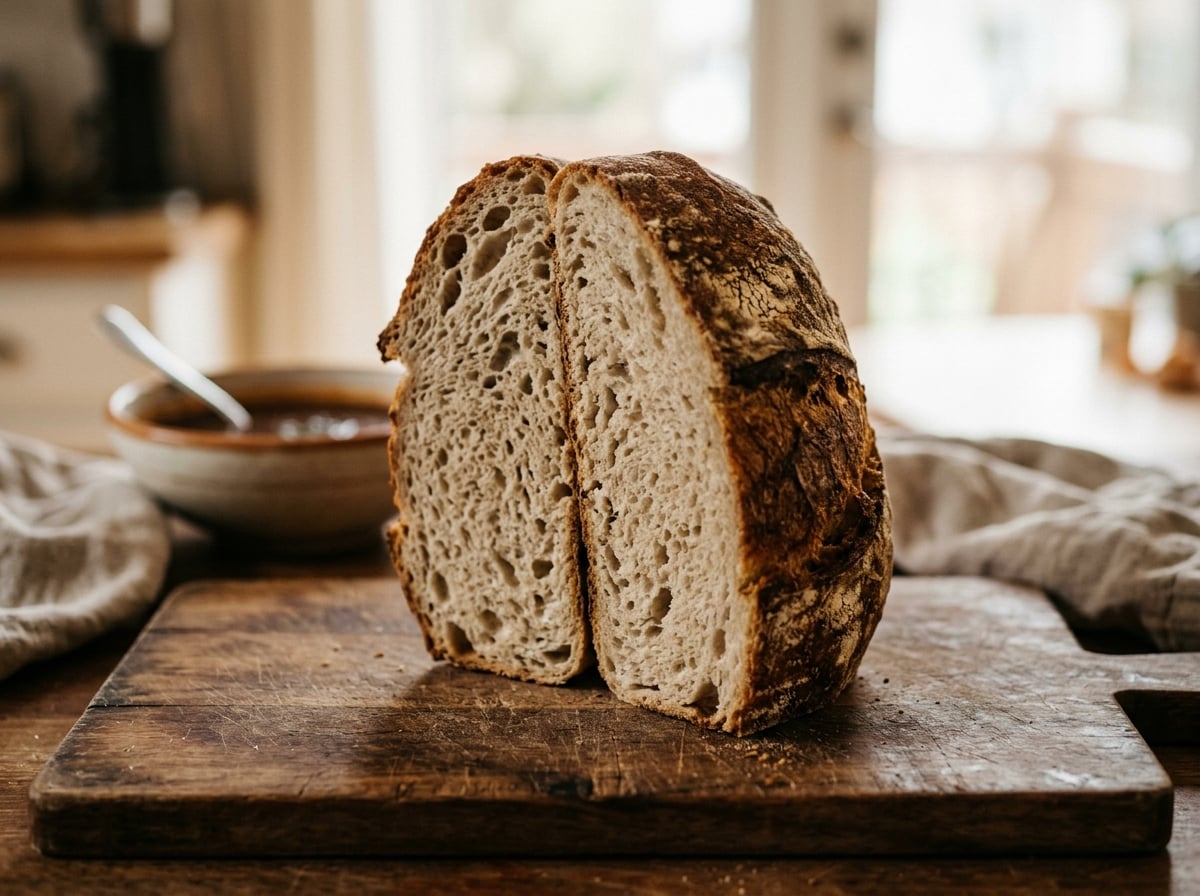
Costco's sourdough bread bowls aren't just smaller versions of their regular sourdough loaves — they're designed for a specific purpose. The dough is shaped into a squat, dense round with a thicker crust structure than a standard sourdough boule. This helps it hold liquid without turning to mush the second you ladle in hot soup. The crumb inside is tighter and chewier than the airy, holey crumb you'd get in a classic artisan sourdough loaf, because a bread bowl prioritizes structural integrity over delicate texture.
Regular Costco sourdough loaves are meant to be sliced thin for sandwiches or toast. In contrast, these Costco sourdough bread bowls are baked in individual portions, roughly the size of a small cantaloupe, specifically so the top can be cut off and the inside hollowed out to create an edible vessel. The crust is also baked a bit darker and firmer on bread bowls, which gives them that satisfying crackle when you tap the top.
Where to Find Costco Sourdough Bread Bowls In-Store
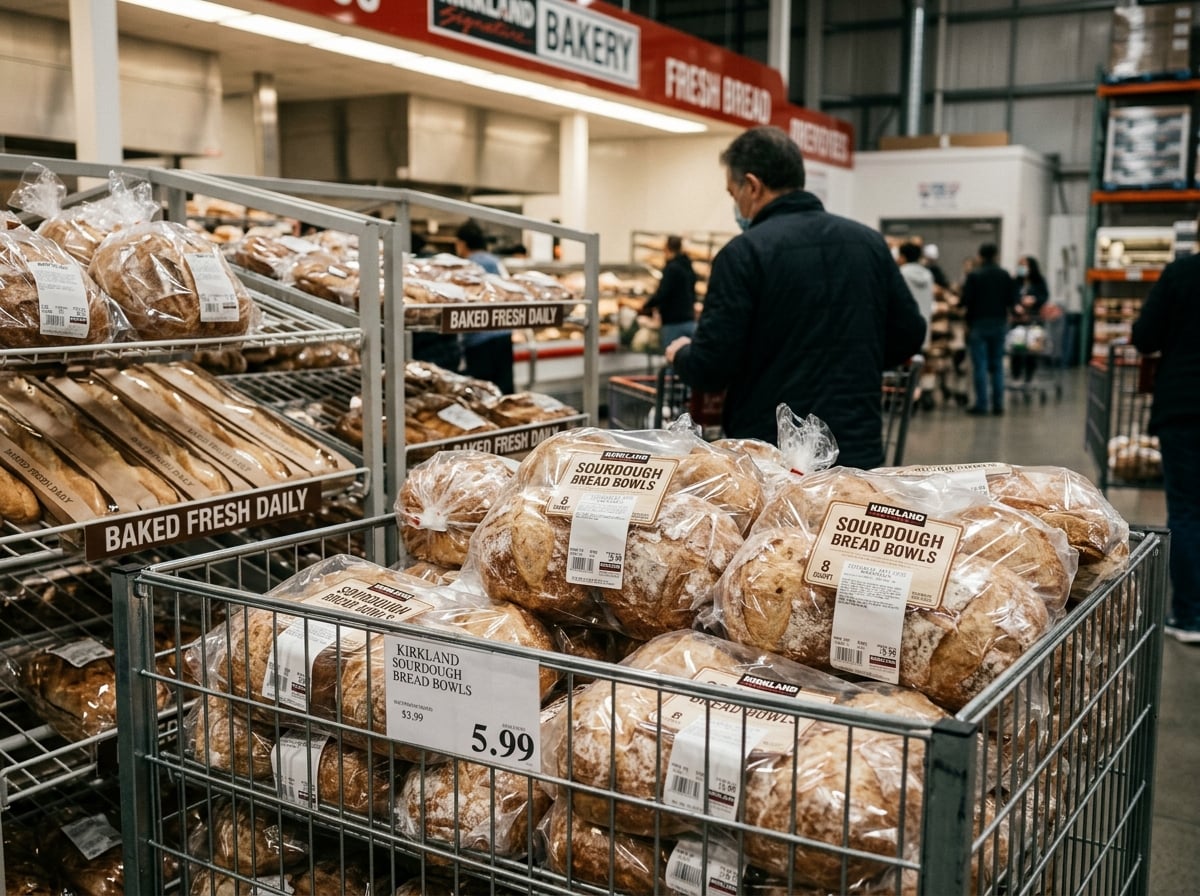
These bread bowls reside in the bakery section, typically near other fresh-baked bread — sourdough loaves, baguettes, and dinner rolls. You'll usually see them on open shelving or in large plastic bins rather than wrapped on a rack, often loose or in a mesh/plastic multi-pack bag.
Availability can be tricky. Costco sourdough bread bowls are seasonal in most regions, appearing heavily from around September through February — essentially, soup season. Some warehouses may carry them earlier, particularly in colder climates, while others don't stock them at all outside the holiday stretch. This is a regional decision made by each Costco's bakery buyer, meaning a location in Minnesota might carry them in October while a store in Florida might not bring them in until closer to Thanksgiving, if at all.
If you're hunting for sourdough bread bowls:
- Call ahead or check the Costco app's "in-warehouse" inventory feature before making a special trip. Keep in mind app accuracy can vary.
- Ask a bakery employee directly. They usually have the most up-to-date information on inventory and seasonal rotations.
- Shop early in the day. Costco sourdough bread bowls sell quickly once soup weather hits, and a warehouse might sell out by early afternoon on a weekend.
Price and Pack Sizes of Costco Sourdough Bread Bowls
Costco sells sourdough bread bowls in multi-packs, most commonly 4 bowls per package, though some warehouses have offered 6-packs depending on the region and time of year. Pricing generally lands between $6.99 and $8.99 per package, which works out to roughly $1.75 to $2.25 per bowl. This is genuinely hard to beat compared to buying individual bread bowls at a grocery store bakery counter, where a single bowl can easily run $3 to $4 on its own.
Prices shift slightly year to year due to wheat and labor costs, and some clubs may price bread bowls a little higher in urban markets. Still, per-unit, this remains one of the better bread deals in the store, especially since each bowl is large enough to genuinely serve as a meal, not just a side.
Ingredients: Real Sourdough Culture or Commercial Shortcut?
This is a common question for serious bread enthusiasts. Costco's sourdough bread bowls do list a sourdough culture in the ingredients, which is a good sign — it means at least part of the fermentation and flavor comes from an actual starter rather than purely commercial yeast.
However, the ingredient list also typically includes baker's yeast alongside the sourdough culture, plus vinegar or citric acid. That combination is a common commercial shortcut: it allows a bakery to achieve a tangy, sourdough-like flavor quickly and consistently at scale, without waiting for a slow, traditional wild-fermentation rise that can take 12 to 24 hours per batch.
A typical ingredient list looks something like: enriched wheat flour, water, sourdough culture, yeast, salt, vinegar, and ascorbic acid (a dough conditioner). Some regional formulations may add a small amount of vital wheat gluten to strengthen the structure enough to hold soup.
So, is it "true" sourdough? Partially. There's real culture contributing flavor, but it's not a slow-fermented, starter-only loaf like you'd get from a dedicated sourdough bakery or a serious home baker. Bread purists might notice the difference — the tang is milder and more one-dimensional than a 100% wild-fermented loaf. Most people picking up a $2 bread bowl for chili night, however, won't mind at all.
Nutritional Breakdown of Costco Sourdough Bread Bowls
Because Costco sourdough bread bowls are dense and sized to hold a full serving of soup, they contain more calories than a couple of slices of sandwich bread. Per bowl (values vary slightly by region and formulation, so check the actual package):
- Calories: approximately 380–420 per bowl
- Carbohydrates: roughly 75–80 grams
- Sodium: around 700–780 milligrams
- Protein: about 12–14 grams
- Fat: 1–2 grams (bread bowls are essentially fat-free on their own)
That sodium number is worth noting if you're watching salt intake — a bread bowl alone can account for a third of a daily sodium limit before you've even added soup. Pair it with a lower-sodium broth-based soup if that's a concern, as a salty chowder inside a salty bowl can add up quickly.
Best Soups and Chilis for Sourdough Bread Bowls
Not every soup is suitable for a bread bowl — thin, watery soups will soak through the bottom before you finish eating. The best pairings for your Costco sourdough bread bowls are thick, hearty, and cling-to-the-spoon in consistency:
- New England clam chowder — The classic pairing, and for good reason. The dairy-based thickness holds up well against the crust.
- Broccoli cheddar soup — Costco actually sells a popular frozen version that pairs perfectly here.
- Loaded baked potato soup — Thick enough to sit in a bowl for 20+ minutes without seeping through.
- Chili, any style — Beef, turkey, or white chicken chili all work well because chili is thick by nature.
- French onion soup — Less traditional as a bread bowl candidate, but the sourdough crust stands in nicely for the usual crouton.
Avoid brothy soups like chicken noodle or minestrone unless you plan to eat quickly — the liquid will soften and eventually break through the base within 30 to 40 minutes.
Reheating Day-Old Costco Sourdough Bread Bowls for a Crisp Crust
Bread bowls can go soft quickly once they're a day old, especially if stored in a plastic bag that traps moisture. To bring back that crackly crust on your Costco sourdough bread bowls:
- Preheat your oven to 375°F (190°C).
- Lightly mist or brush the outside crust with water. This helps re-crisp it rather than just drying it out.
- Place directly on the oven rack or a baking sheet for 8 to 10 minutes, until the crust sounds hollow when tapped.
Skip the microwave entirely for crust purposes — it will warm the bread but leave the crust chewy and tough instead of crisp. If you're short on time, a toaster oven at the same temperature for 6 to 7 minutes works nearly as well as a full oven.
Hollowing Out Sourdough Bread Bowls Without Waste
The part everyone gets wrong is discarding the bread you scoop out. Don't! Cut a lid off the top (about a third of the way down), then carve out the interior, leaving roughly a half-inch wall for structural strength. That removed bread has plenty of uses:
- Cube it and toast with olive oil and garlic salt at 400°F (200°C) for 10 minutes for fresh croutons — far better than anything from a bag.
- Tear it into chunks for dipping directly into the soup.
- Freeze the scraps in a bag and use them later for bread pudding or a quick stuffing.
A single bread bowl typically yields a cup or more of usable interior bread, so there's no reason to waste it.
Can You Freeze Costco Sourdough Bread Bowls?
Yes, and it works well if done right. Wrap each unhollowed bowl tightly in plastic wrap, then place in a freezer bag or wrap in foil as a second layer. Frozen Costco sourdough bread bowls hold up for about 2 to 3 months without major quality loss.
Thaw at room temperature for a few hours, then refresh in a 375°F (190°C) oven for 10 minutes to restore the crust before hollowing and filling. Freezing already-hollowed bowls works too, though the walls can turn slightly gummy near the cut edges after thawing — freezing whole loaves gives better results.
Costco vs. Homemade Sourdough Bread Bowls
Making sourdough bread bowls from scratch is genuinely satisfying, but it's a commitment. A real starter-based dough needs an active, fed sourdough starter (which takes a week or more to establish from nothing), a bulk fermentation of 4 to 6 hours, then shaping and a final proof, then baking — easily a 10 to 14 hour process start to finish once you count starter feeding time.
The upside of homemade is control: you decide the tang level, the crust thickness, and you skip the vinegar-and-commercial-yeast shortcut entirely. The downside is time, plus the learning curve of shaping dough that holds its round shape without collapsing.
For a weeknight chili dinner, Costco's version wins on convenience and price every time. For a dinner party where you want to show off, or if you already maintain a starter, homemade sourdough bread bowls deliver a noticeably better crust and more complex sour flavor.
Frequently Asked Questions About Costco Sourdough Bread Bowls
Are Costco sourdough bread bowls vegan?
No. Most formulations include dairy-derived ingredients or are processed on shared equipment with dairy products, and some regional recipes include milk or whey as a dough conditioner. Always check the specific package, as formulations vary by bakery supplier and region.
Do Costco sourdough bread bowls contain dairy?
Often yes, in small amounts (whey or milk powder used as conditioners), though not always listed prominently. If you have a dairy allergy rather than just a preference, read the ingredient panel on your specific package rather than assuming based on a previous purchase.
How long do Costco sourdough bread bowls stay fresh?
At room temperature in the original packaging, expect 2 to 3 days before the crust softens and staling sets in. Stored in a paper bag rather than plastic, they'll hold slightly better since paper doesn't trap moisture against the crust. Beyond day 3, your best move is refreshing in the oven or repurposing the bread for croutons rather than eating it as-is.
Leave a Reply