Decoding Costco's Blueberry Sourdough Bread: A Complete Guide
If you've spotted a purple-flecked loaf near the Costco bakery case and wondered whether it's worth tossing in your cart, here's the short answer: yes, it's a genuinely good bread, it's not a true 100% wild sourdough in the artisan sense, and it sells out fast enough that you shouldn't assume it'll be there next week. Below is everything I've learned buying, freezing, toasting, and generally obsessing over this loaf over multiple seasons.
- What Exactly Is Costco's Blueberry Sourdough?
- Is It "Real" Sourdough? Understanding the Ingredients
- Taste, Texture, and How Costco's Version Compares to Homemade
- Nutrition Facts and Price Point
- Optimal Storage, Freezing, and Refreshing Techniques
- The Best Ways to Enjoy Costco Blueberry Sourdough
- Crafting Your Own Homemade Copycat Version
- Your Top Questions About Costco Blueberry Sourdough, Answered
What Exactly Is Costco's Blueberry Sourdough?
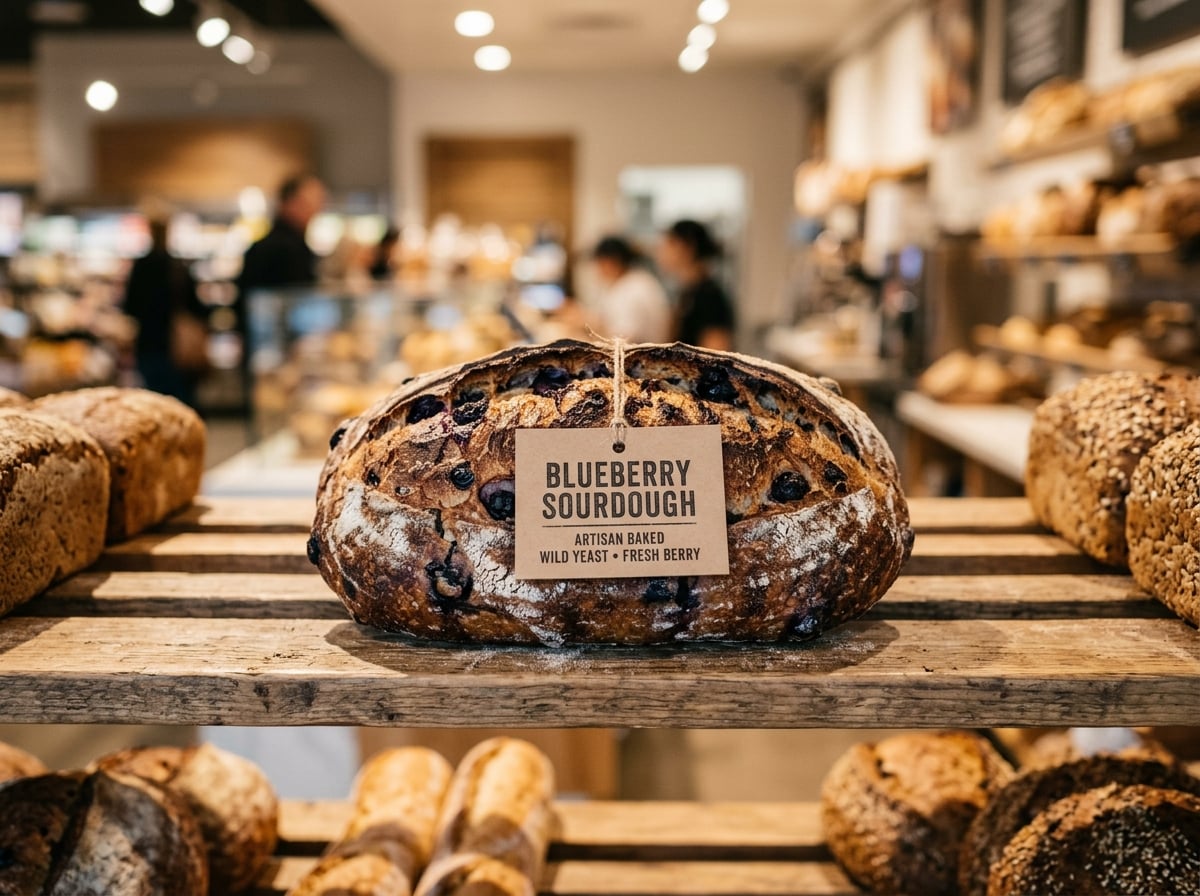
Costco's blueberry sourdough bread consistently appears in the bakery section, usually shelved alongside other specialty loaves like ube bread or seasonal pumpkin bread, rather than with the standard sandwich bread. It's typically sold as a full round or oblong loaf, often pre-sliced or scored for easy tearing. Crucially, it's almost always a seasonal or rotating item rather than a permanent fixture in their extensive inventory. For information on other Costco sourdough options, check out our dedicated guide.
That's the biggest thing to understand going in: this isn't like Kirkland Signature peanut butter, which you can count on being there every single trip. This popular blueberry sourdough tends to cycle in during spring and summer months, sometimes reappearing briefly around the holidays with a slightly different spin (some warehouses have run a cinnamon-blueberry variant). Availability also varies by region — members in the Pacific Northwest and parts of the Midwest report seeing it more consistently than folks in smaller warehouse markets. Your best bet is asking the bakery staff directly; they usually know the delivery cadence for that location, and some employees will even tell you which day of the week fresh batches typically land.
Because it's a bakery item rather than a shelf-stable packaged good, it's either baked in-house or shipped fresh from a regional Costco bakery facility, not manufactured centrally like their bagged breads.
Is It "Real" Sourdough? Understanding the Ingredients
This is where I'll push back on some of the marketing language. True sourdough, in the traditional sense, is leavened entirely by a wild yeast and lactic acid bacteria culture — no added commercial yeast. A truly authentic sourdough recipe relies solely on a vibrant, active starter. Costco's blueberry sourdough, while flavorful and textured, uses a sourdough starter for its characteristic tang and chew, but the ingredient list typically also includes added yeast (usually listed as "yeast" alongside "sourdough culture" or "sourdough starter"). That combination is common in large-scale commercial bakeries because pure wild-yeast fermentation is slow and unpredictable at scale — you can't reliably produce thousands of loaves a day if you're waiting on wild yeast to do all the work.
So what you're getting is a hybrid: a bread that gets its tang, unique chew, and some of its digestive characteristics from a starter culture, but that rises faster and more predictably because of supplemental yeast. This isn't a knock against it — plenty of excellent bakery-made sourdoughs work this way — but if you're seeking out sourdough specifically for the low-and-slow, wild-fermented profile, know that this loaf is more "sourdough-style" than purist sourdough.
Beyond the leavening, the ingredient list generally includes wheat flour, dried or dehydrated blueberries (sometimes a blueberry flavor blend), sugar, salt, cultured wheat flour, and preservatives common to bakery breads with a few days of shelf life, like calcium propionate. Some batches even use blueberry juice concentrate for enhanced color and flavor alongside the fruit pieces.
Taste, Texture, and How Costco's Version Compares to Homemade
The flavor of the Costco blueberry sourdough bread is a genuinely nice balance — you get the tang you expect from sourdough crust and crumb, cut with pockets of sweet-tart blueberry that aren't overwhelming. It's definitely not a dessert bread. Think of it as sitting perfectly between a plain sourdough boule and a fruit-studded breakfast loaf.
Texture-wise, the crust has a decent chew without the aggressive, jaw-workout crackle of an artisan bakery sourdough. The crumb is soft, slightly moist from the fruit, and holds together remarkably well for slicing — better than most homemade versions, honestly, because commercial bakeries can dial in hydration levels that home bakers often struggle to nail.
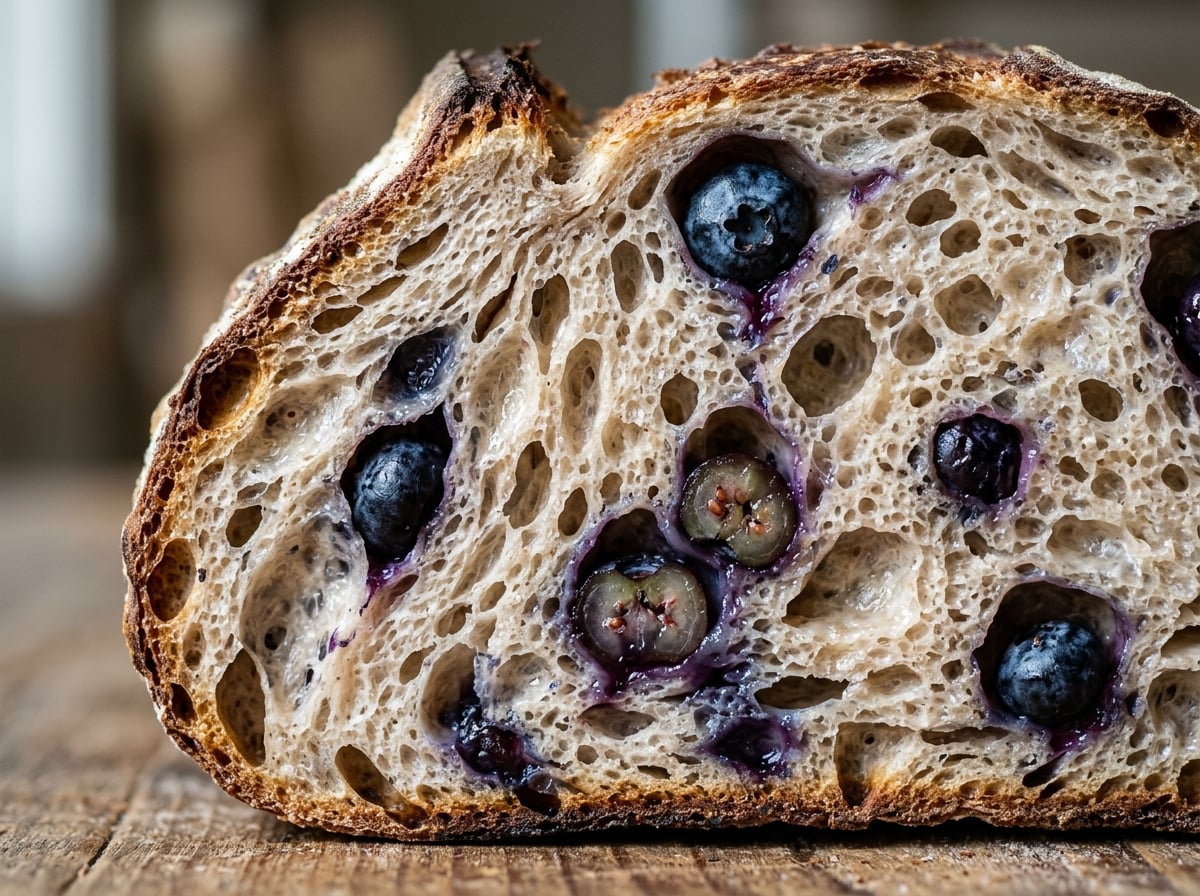
Compared to homemade blueberry sourdough, the Costco version is notably more uniform in appearance and less sour in flavor. If you've made your own using an active, well-fed starter with a long bulk fermentation, your loaf will likely have more pronounced tang, an open, irregular crumb structure, and a chewier, more blistered crust. What Costco sacrifices in rustic character, it makes up for in consistency — every loaf tastes basically the same, which is either a feature or a bug depending on what you're after in your bread.
Nutrition Facts and Price Point
Pricing for the Costco blueberry sourdough bread generally runs in the $6–$7 range per loaf, which is quite competitive for a specialty bakery bread. You'd typically pay more at most grocery store bakeries or farmers markets for a comparable item.
Per slice (nutrition varies slightly by batch and region, but this is roughly typical):
- Calories: 130–150
- Total carbs: 26–28g
- Sugars: 6–8g
- Protein: 4–5g
- Fiber: 1–2g
- Sodium: 170–200mg
It's important to note that it's not a low-sugar bread — the dried blueberries and added sugar push it noticeably higher than a plain sourdough, which usually sits around 1–2g of sugar per slice. It's also not fortified or particularly high in fiber, so don't mistake "sourdough" for "health bread" in this instance.
Optimal Storage, Freezing, and Refreshing Techniques
This loaf has a shorter shelf life than mass-produced sandwich bread because it lacks the heavy preservative load — expect 3 to 4 days of good quality at room temperature in a sealed bag before it starts drying out or molding, faster in humid climates.
Freezing works exceptionally well, and I'd honestly recommend doing it immediately if you won't finish the loaf within a couple of days:
- Pre-slice: Slice the whole loaf before freezing so you can pull individual pieces as needed.
- Wrap tightly: Wrap tightly in plastic wrap, then place in a freezer bag, pressing out all excess air. Double-wrapping is crucial here because the fruit pieces make the crumb more prone to freezer burn than plain bread.
- Duration: It keeps well for up to 3 months frozen without major quality loss.
To refresh a thawed or slightly stale loaf, skip the microwave — it tends to turn the crumb gummy. Instead:
- Whole or half loaf: Wrap it loosely in foil and warm in a 300°F (150°C) oven for about 10 minutes to recrisp the crust without drying the inside.
- Individual slices: A toaster or toaster oven on a medium setting does the job in 2–3 minutes and actually improves the texture by caramelizing the sugars in the blueberries slightly, enhancing the flavor.
The Best Ways to Enjoy Costco Blueberry Sourdough
This bread truly earns its keep at breakfast more than anywhere else. Here are some top recommendations:
French toast is the standout use — the slight sweetness and fruit pockets mean you can dial back the sugar in your egg-milk batter. Dip slices for about 20 seconds per side, cook on medium heat, and you barely need syrup.
Toast with butter is the simplest test of whether a bread is good, and this one passes with flying colors. A thin layer of salted butter and maybe a delicate drizzle of honey is more than enough to highlight its flavors.
Bread pudding is where a day-old or slightly stale loaf absolutely shines. Cube it, soak it overnight in a rich custard of eggs, cream, cinnamon, and a splash of vanilla, then bake at 350°F (175°C) for 40–45 minutes. The existing blueberries mean you can conveniently skip adding extra fruit.
It also works surprisingly well as a base for a gourmet grilled cheese with brie or goat cheese, though that's a more polarizing suggestion depending on how you feel about sweet-savory combinations.
Crafting Your Own Homemade Copycat Version
If you keep a sourdough starter fed and active, making your own blueberry sourdough is a very doable weekend bake. Use your standard sourdough formula — roughly 500g flour, 350g water, 100g active starter, 10g salt — and fold in 100–150g of dried blueberries during the final stretch-and-fold, after your dough has had its first hour of bulk fermentation. Adding them too early tends to smear the fruit through the dough and dye everything an unappetizing gray-purple.
Bulk ferment for 4–6 hours at room temperature until the dough has grown by about 50% and feels airy. Then, shape, cold-proof overnight in the fridge, and bake in a Dutch oven at 450°F (230°C) — covered for 20 minutes, then uncovered for another 20–25 minutes — until deeply golden. You'll end up with a more sour, more textured version than Costco's, and honestly, once you've made it yourself, the fruit-to-bread ratio is something you can tune precisely to your own taste rather than the bakery's.
Your Top Questions About Costco Blueberry Sourdough, Answered
Is Costco blueberry sourdough bread healthier than regular white bread? Marginally, at best. While it has slightly more fiber and fewer highly refined ingredients than cheap white sandwich bread, the added sugar from the dried blueberries and other sweeteners means it's not a clear nutritional upgrade. If you're watching sugar intake, treat it as a treat bread, not a daily staple.
Does Costco's blueberry sourdough contain real blueberries? Yes, but typically in dried or dehydrated form rather than fresh. These are sometimes supplemented with blueberry juice concentrate for enhanced flavor and color. They are real fruit, just processed for shelf stability, not fresh berries folded in raw.
Is Costco blueberry sourdough available year-round? No, not reliably. It's a seasonal bakery item at most warehouses, generally more available in spring and summer, and its availability can vary significantly by region and even by specific store. If you find a loaf you like, it's definitely worth asking the bakery team about restock timing rather than assuming it will always be on the shelf for your next visit.
Leave a Reply