The Top 7 Sourdough Breads to Try in 2026
Looking for the top 7 sourdough bread in 2026? This guide features a diverse selection, including classic San Francisco sourdough, Tartine-style open-crumb country loaf, German-style rye sourdough, ancient-grain einkorn sourdough, sourdough focaccia, soft sourdough sandwich bread, and spelt sourdough. Each offers a unique experience, showcasing distinct flours, hydration levels, and fermentation approaches. The result is a wide range of flavors and textures, from sharply tangy and chewy to subtly mild and pillowy. You can often find these varieties at independent bakeries expanding their reach, or you can bake them at home with a well-maintained sourdough starter and a bit of patience.
- Why Sourdough Variety Has Exploded by 2026
- 7. Spelt Sourdough
- 6. Soft Sourdough Sandwich Bread
- 5. Sourdough Focaccia
- 4. Ancient-Grain Einkorn Sourdough
- 3. German-Style Rye Sourdough
- 2. Tartine-Style Country Loaf
- 1. Classic San Francisco Sourdough
- Quick Comparison: Top 7 Sourdough Breads
- Which Sourdough Bread Should You Try First?
- Frequently Asked Questions
Why Sourdough Variety Has Exploded by 2026
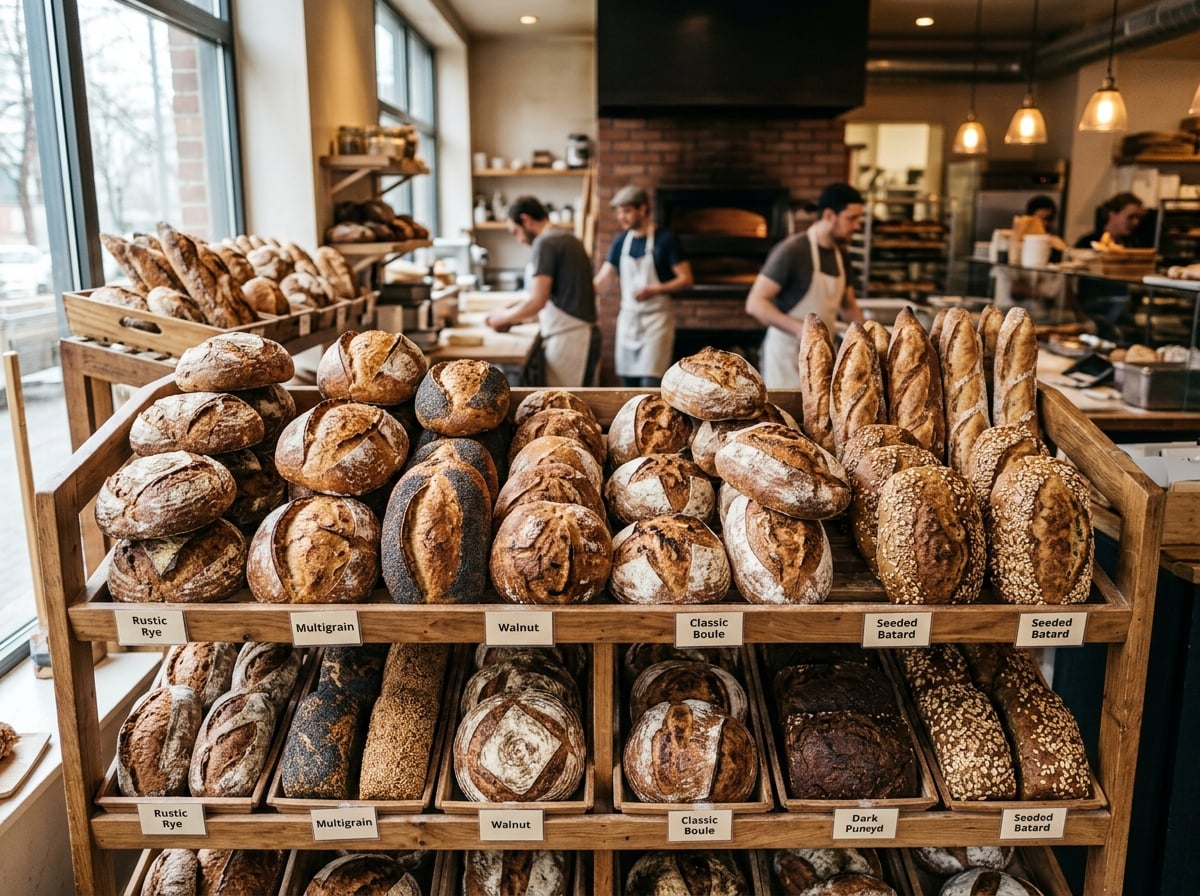
Sourdough's popularity, which surged in 2020, hasn't waned; instead, its diversity has exploded by 2026. Just a few years ago, "sourdough" at most grocery stores typically meant a single, vaguely tangy white boule with a thin, crackly crust. Now, bakeries are experimenting with rye, spelt, einkorn, and various heirloom wheat varieties, using different starters to create a spectrum of flavors. Home bakers, too, have evolved; many who once struggled to keep a simple flour-and-water mix alive are now tending multiple sourdough cultures for specific baking purposes.
This growth stems partly from a genuine shift in focus towards gut health and digestibility. The long fermentation process inherent in sourdough breaks down phytic acid and modifies gluten structures, making it more tolerable for many individuals with mild sensitivities compared to commercial yeast breads. Beyond health benefits, there's a growing culinary curiosity that aligns with centuries of European and Middle Eastern baking traditions: naturally leavened bread offers a vast array of flavor profiles. Local bakeries are increasingly expanding their sourdough offerings, with specialized shops focusing on single grain types, like rye or einkorn, drawing long queues.
Below is a countdown of the top 7 sourdough bread in 2026, ranked by their distinctiveness and how worthwhile they are to seek out (or bake) this year. To assess the overall value of sourdough bread, consider not just taste, but also its health benefits and versatility. For a comprehensive review of sourdough bread in general, you can explore further details on trends and future predictions.
7. Spelt Sourdough
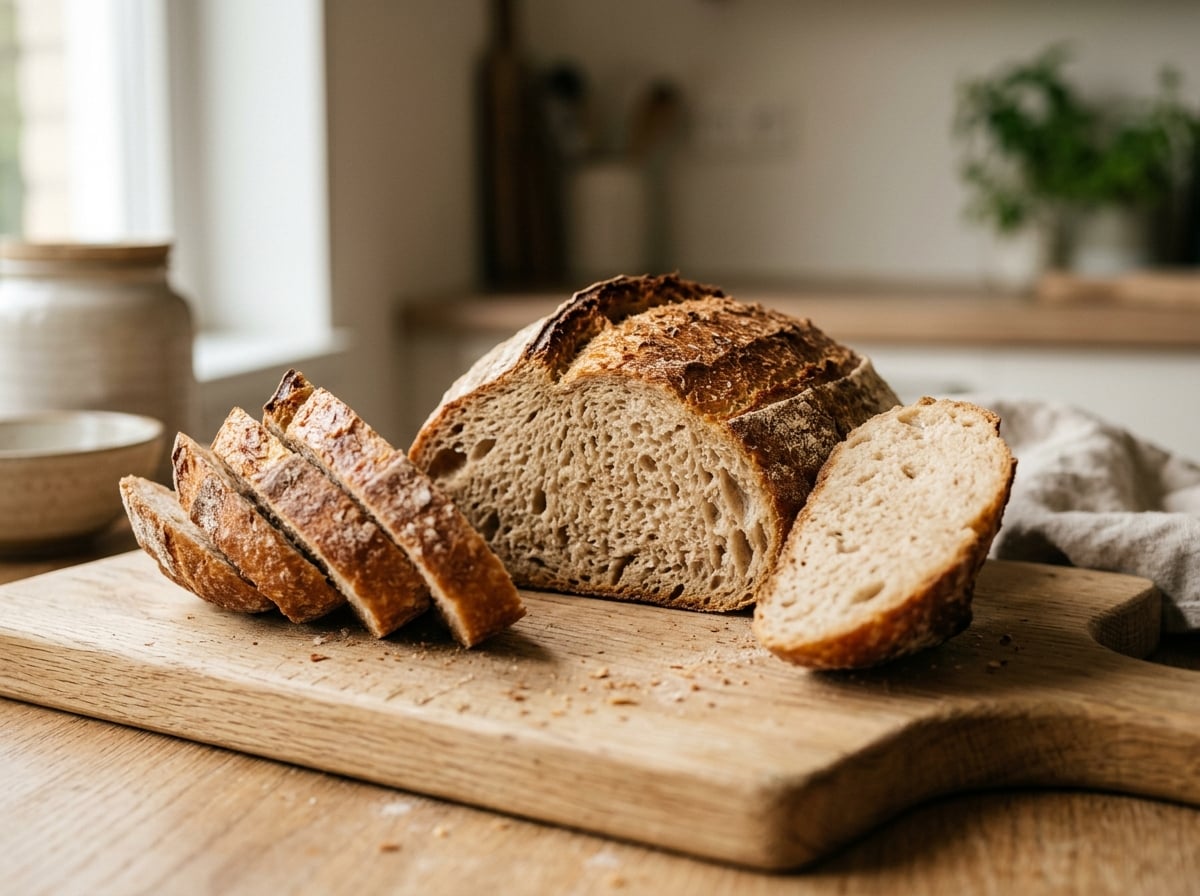
Spelt, an ancient relative of modern wheat, possesses a more delicate gluten structure. This results in spelt sourdough having a noticeably softer chew and a subtly sweet, nutty flavor profile that stands apart from standard white sourdough. It ferments more quickly due to its gluten breaking down readily, making overproofing a common risk. Aim for a bulk fermentation of four to six hours at room temperature, which is shorter than the eight-plus hours typically required for a standard country loaf.
Where to Find It: Increasingly, specialty and European-style bakeries offer whole spelt or half-spelt loaves. If you're near a German bakery, look for "dinkel" on the label.
Baking at Home: Begin by substituting 30% of your bread flour with whole spelt flour before attempting a 100% spelt loaf. The dough will feel slacker and stickier than what you might be used to, requiring gentler handling, fewer stretch-and-folds, and more resting time.
6. Soft Sourdough Sandwich Bread
This particular sourdough variety has converted many skeptics who believed all sourdough meant a dense, tough crust. Made with a touch of fat (butter or olive oil) and often honey, this enriched dough technique maintains the characteristic tangy depth of natural fermentation while delivering a soft, pillowy crumb perfect for everyday sandwiches and toast.
Its true appeal lies in its practicality. Most families don't need an artisan-style, crackly crust for their daily meals. This soft sourdough offers a versatile option, also providing a delicious use for sourdough discard beyond common recipes like crackers or pancakes.
Where to Find It: Farmers' market vendors and online sourdough subscription services have widely adopted this style due to its superior shipping and slicing qualities compared to rustic loaves.
Baking at Home: Use a loaf pan, incorporating 2 tablespoons of fat and 1–2 tablespoons of sweetener per 500g of flour. Expect a shorter, warmer bulk ferment, as enriched doughs tend to rise more slowly than lean ones.
5. Sourdough Focaccia
Focaccia's high-hydration, forgiving dough is almost perfectly suited for sourdough fermentation. The airy, open, bubbly structure that naturally leavened dough tends to form is precisely what focaccia is meant to achieve. Drizzled with olive oil, sprinkled with flaky salt, and topped with seasonal ingredients like cherry tomatoes, rosemary, or thinly sliced onion, it's endlessly adaptable. Moreover, it's one of the easier sourdough formats for beginners, as an imperfect or messy dough still bakes up beautifully.
Where to Find It: Most reputable sourdough bakeries now feature focaccia, often as a popular Friday-only special, thanks to its high demand and relatively less labor-intensive preparation compared to shaping boules.
Baking at Home: Aim for 80–85% hydration, allow for an overnight cold ferment in the refrigerator, then dimple and top the dough straight from the fridge before a final hour at room temperature.
4. Ancient-Grain Einkorn Sourdough
Einkorn, the oldest cultivated wheat variety still in use, bakes into a dense, golden loaf with a distinctly earthy—almost malty—flavor unlike any modern wheat bread. Its gluten structure is different and weaker, meaning einkorn sourdough typically won't achieve the large, open crumb of a Tartine loaf. Instead, you'll find a tighter, more cake-like texture that many people surprisingly prefer once they've tried it.
For adventurous eaters in 2026, this is the loaf to try first. It's generating considerable buzz among grain-focused bakeries and offers a taste experience that is furthest from what most consider "regular bread."
Where to Find It: Mill-direct bakeries and farm-to-table establishments specializing in heritage grains are your best bet. It's rarely mass-produced because einkorn yields less flour per acre than modern wheat.
Baking at Home: Reduce hydration to approximately 65–70%, handle the dough minimally, and don't expect (or try to force) large holes. Success here is measured more by its unique flavor and soft crumb.
3. German-Style Rye Sourdough
Rye sourdough, particularly high-percentage loaves (70% rye or more), is texturally quite distinct from the fluffy wheat loaves most Americans associate with "sourdough." These loaves are dense, moist, and deeply sour, often flavored with caraway seeds. They also have an impressive shelf life, remaining fresh for over a week, a feat white sourdough cannot match.
Due to rye flour's lack of a strong gluten network, these breads rely on starch gelatinization during a hot bake and a well-matured sourdough starter for structure, rather than gluten development. This is why rye sourdough is frequently baked in a loaf pan instead of free-form.
Where to Find It: German, Scandinavian, and Eastern European bakeries are the primary sources for authentic rye sourdough. A true Vollkornbrot or pumpernickel is well worth seeking out if available nearby.
Baking at Home: Use a rye-specific starter (feed your regular starter rye flour for about a week before baking), anticipate a wetter, almost batter-like dough consistency, and bake at a lower temperature for a longer duration—around 375°F (190°C) for 60–70 minutes.
2. Tartine-Style Country Loaf
Chad Robertson's Tartine Bakery in San Francisco popularized the high-hydration, long-fermented country loaf, which has become the benchmark for many serious home bakers. This style is characterized by a deeply caramelized, often dark crust, an irregular open crumb with large holes, and a tangy flavor that is complex rather than sharply vinegary.
This style is defined by its technique as much as its outcome: a levain built the night before, a dough with 75–80% hydration, a long cold retard in the refrigerator, and a scorching-hot Dutch oven bake. While more labor-intensive than other loaves on this list, it's arguably the most photographed and shared sourdough style, and for good reason.
Where to Find It: Any bakery branding itself as "artisan" likely offers some interpretation of this style. Tartine's own locations and its many imitators in major cities set the gold standard.
Baking at Home: This is the loaf that justifies investing in a kitchen scale and a Dutch oven, as precision in hydration percentage is critical for success.
1. Classic San Francisco Sourdough
Topping the list of the top 7 sourdough bread in 2026 is the classic San Francisco sourdough. It remains the ultimate benchmark, largely because the specific wild yeast and bacteria strain responsible for its iconic flavor—Lactobacillus sanfranciscensis—is intrinsically linked to the Bay Area's unique microclimate and cannot be fully replicated elsewhere. While bakeries outside the region achieve close approximations with local starters, the distinctly sharp, assertively sour tang of a true San Francisco loaf, combined with its thick, blistered, chewy crust, continues to be a unique regional specialty.
Where to Find It: Boudin Bakery and Tartine in San Francisco are essential pilgrimage sites. However, mail-order sourdough from Bay Area bakeries has become much more reliable in 2026 due to advancements in packaging.
Baking at Home: Achieving an identical result without the local wild yeast is challenging. However, a well-matured starter (at least two to three weeks old), regularly fed with unbleached flour, and maintained at a slightly warmer ambient temperature can produce a satisfyingly close approximation.
Quick Comparison: Top 7 Sourdough Breads
| Style | Hydration | Typical Ferment Time | Flavor Profile | Best For |
|---|---|---|---|---|
| San Francisco Sourdough | 70–75% | 12–18 hrs | Sharp, assertively tangy | Purists, crusty boules |
| Tartine Country Loaf | 75–80% | 18–24 hrs | Mild tang, caramel crust | Open-crumb enthusiasts |
| German Rye Sourdough | 80–90% | 8–12 hrs | Deep, earthy sour | Sandwiches, long storage |
| Einkorn Sourdough | 65–70% | 10–14 hrs | Nutty, malty, mild | Adventurous, heritage-grain fans |
| Sourdough Focaccia | 80–85% | 14–20 hrs (incl. cold proof) | Savory, oil-forward | Beginners, entertaining |
| Soft Sandwich Sourdough | 65–70% | 6–10 hrs | Mildly tangy, slightly sweet | Everyday eating, kids |
| Spelt Sourdough | 70–75% | 4–6 hrs | Sweet, nutty, soft | Faster bakes, lighter texture |
Which Sourdough Bread Should You Try First?
If you're new to baking sourdough beyond a basic white loaf, start with focaccia. It's forgiving of mistakes and still delivers that unmistakable fermented flavor. For those already comfortable with shaping and scoring, the Tartine country loaf is an excellent choice to master in 2026, as its techniques are broadly applicable to many other styles on this list. And if your goal is to experience a taste truly unique, seek out an authentic San Francisco loaf – ideally warm, and enjoyed right where you bought it.
Frequently Asked Questions
What makes San Francisco sourdough unique?
San Francisco sourdough's unique flavor comes from a specific wild yeast and bacteria strain, Lactobacillus sanfranciscensis, which thrives in the Bay Area's microclimate. This gives it an assertively sour tang and a distinctive thick, chewy crust that is difficult to replicate elsewhere.
Can I bake all these sourdough breads at home?
Yes, you can bake all these sourdough varieties at home, though some require more experience or specific equipment (like a Dutch oven for Tartine-style loaves or a loaf pan for rye). Starting with a well-maintained sourdough starter is key for any of these recipes.
Which sourdough bread is best for beginners?
Sourdough focaccia is often recommended for beginners because its high-hydration dough is very forgiving. Even an imperfectly handled dough can result in a beautiful, bubbly, and flavorful focaccia.
What is the main difference between modern wheat and ancient grain sourdoughs like Einkorn or Spelt?
The main difference lies in their gluten structure and flavor profiles. Ancient grains like Einkorn and Spelt have weaker, more delicate gluten than modern wheat, resulting in a softer, tighter crumb rather than a large, open one. They also offer distinct nutty, malty, or sweet flavors that modern wheat lacks.
How can I make my sourdough bread softer for sandwiches?
To make a softer sourdough bread suitable for sandwiches, incorporate fats like butter or olive oil and a touch of sweetener such as honey into the dough. Baking it in a loaf pan also helps achieve a softer crust and crumb, differing from the rustic, crusty boules.
Leave a Reply