Franz Gluten Free Sourdough Ingredients: A Complete Breakdown
Franz Gluten Free Sourdough bread is carefully crafted from a base of brown rice flour and tapioca or potato starch. These are bound together with xanthan gum and leavened with a unique sourdough culture and yeast. The loaf is then finished with a precise selection of stabilizers, sugars, and oils, all working to maintain its softness and ensure a good shelf life. Importantly, there’s no wheat, rye, or barley used in its formula. The bread is produced in a dedicated gluten-free facility, not a shared line, which is crucial for those needing strict gluten avoidance. If you’re buying this bread due to a medical necessity or a self-imposed elimination diet, understanding the exact Franz Gluten Free Sourdough ingredients and what isn’t included matters significantly more than with a regular loaf of rye.
- Why Understanding the Ingredient List for Gluten-Free Sourdough is Key
- The Full Franz Gluten Free Sourdough Ingredients List, Explained
- Allergen and Cross-Contamination Considerations
- Nutritional Profile: Franz Gluten-Free Sourdough vs. Traditional Wheat Sourdough
- How the Ingredients Influence Taste, Texture, and Shelf Life
- Frequently Asked Questions
Why Understanding the Ingredient List for Gluten-Free Sourdough is Key
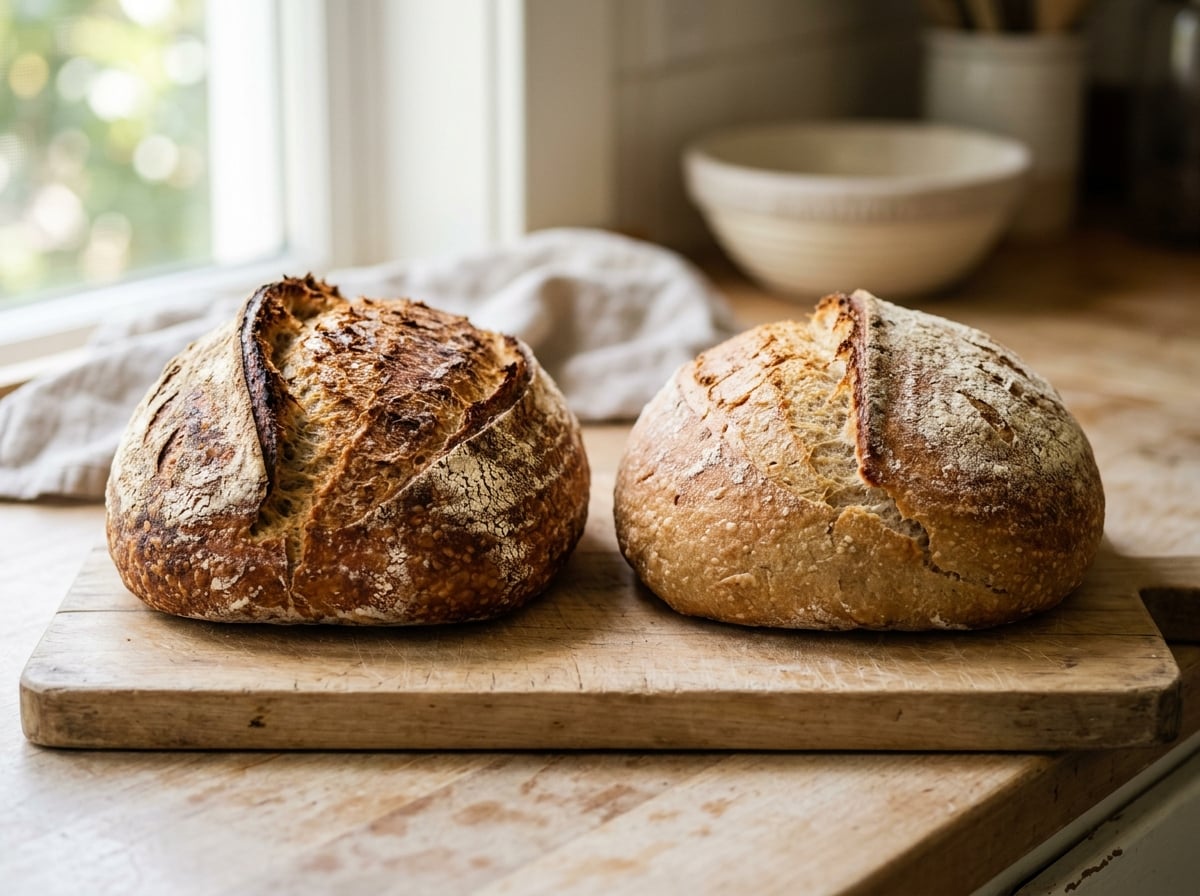
Gluten-free sourdough occupies a unique niche in the baking world. Traditional sourdough achieves its distinctive tang and chewy texture through the fermentation of wheat flour by wild yeast and lactic acid bacteria over many hours or even days. When you remove wheat, a bakery must entirely reconstruct the bread’s structure. This involves using alternative flours, starches, and gums that behave quite differently from gluten.
This means the ingredient panel on a bag of Franz Gluten Free Sourdough isn’t just a regulatory requirement; it tells the whole story of how the bread is engineered. Every starch, gum, and acid listed plays a vital role that gluten would typically perform in a conventional loaf: it traps gas bubbles, retains moisture, provides chewiness to the crumb, and prevents the slice from crumbling when you spread something on it.
For individuals with celiac disease, a wheat allergy, or non-celiac gluten sensitivity, the stakes are considerably higher. Even a trace amount of wheat starch mistakenly labeled as “gluten-free” starch, or a facility that also processes wheat flour nearby, can lead to real physical symptoms, not just discomfort. This highlights why reading and understanding labels is far more critical here than it might be for other everyday food products.
The Full Franz Gluten Free Sourdough Ingredients List, Explained
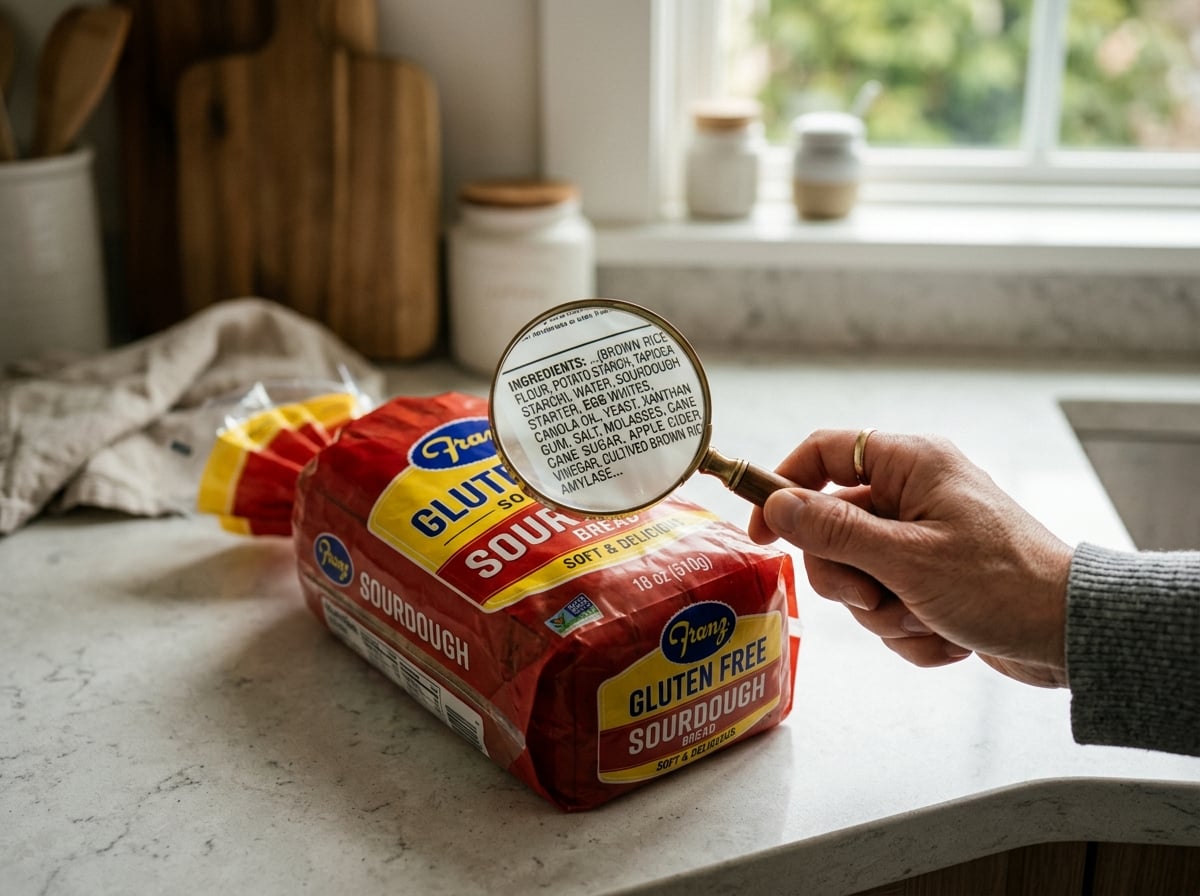
Franz occasionally updates its formulations, and variations might exist based on package size or regional distribution. Therefore, always verify the actual bag in your hand against this information. However, the core formula for Franz Gluten Free Sourdough typically includes the following components, grouped by their function in the loaf.
Structure and Bulk Ingredients:
- Water — Essential as the base of the dough. In gluten-free baking, it also plays a more prominent role in helping starches gelatinize during the baking process.
- Brown rice flour — The primary flour base. It offers a mild flavor and is often considered easier to digest than white rice flour, as it retains the bran layer.
- Tapioca starch (tapioca flour) — Extracted from cassava root, this ingredient contributes chewiness and a slight elasticity that brown rice flour alone cannot provide.
- Potato starch — Distinct from potato flour, this is a nearly flavorless starch primarily used for moisture retention and to create a softer crumb.
Fermentation and Leavening Ingredients:
- Sourdough culture (often listed as “cultured brown rice flour” or “cultured rice flour”) — This is the source of the authentic sourdough tang. A live culture ferments a rice-flour base over time, producing the lactic and acetic acids that impart the bread’s characteristic sour note. For those interested in how a sourdough culture works, you might find our guide on Sourdough Starter: The Complete Guide helpful.
- Yeast — Added alongside the culture to ensure a reliable rise, as relying solely on wild fermentation can be challenging to control at a commercial scale.
- Cultured dextrose or vinegar — Sometimes included as a byproduct of fermentation or an acidity regulator, these ingredients reinforce the sour flavor without requiring extended proofing times.
Binding Agents:
- Xanthan gum — Arguably the most crucial non-flour ingredient in nearly all commercial gluten-free breads. It effectively mimics gluten’s elasticity and helps the loaf retain air bubbles, preventing collapse.
- Guar gum (used in some formulations instead of, or alongside, xanthan) — Serves a similar binding purpose, often contributing a slightly different mouthfeel.
Sweeteners and Flavor Enhancers:
- Cane sugar or evaporated cane juice — These ingredients feed the yeast and balance the acidity from the sourdough, ensuring the loaf isn’t overly sour.
- Sea salt — A standard ingredient for flavor enhancement and for regulating yeast activity.
Fats:
- Sunflower oil, canola oil, or olive oil (may vary by brand and batch) — Incorporated for tenderness and to help slow down the staling process.
Shelf-Life and Texture Stabilizers:
- Cellulose fiber — An inert, plant-derived fiber used for texture improvement and moisture control, found in almost all commercial gluten-free breads.
- Enzymes (may appear simply as “enzymes” without further detail) — Used in minuscule quantities to enhance crumb texture and improve dough handling.
- Calcium propionate or a similar mold inhibitor — This preservative extends the bread’s shelf life significantly beyond what a preservative-free loaf would offer.
This is indeed a longer list of franz gluten free sourdough ingredients than what you’d find in a traditional four-ingredient sourdough (flour, water, salt, starter). However, this isn’t a drawback; it’s the necessary compromise for creating gluten-free bread that can be sliced cleanly and doesn’t disintegrate in the toaster.
Allergen and Cross-Contamination Considerations
Franz manufactures its gluten-free line in a dedicated gluten-free facility. This offers a significantly stronger assurance than simply stating “made on shared equipment with thorough cleaning.” This distinction is vital for individuals with celiac disease, where even 20 parts per million of gluten can trigger an immune response over time.
Here are a few important practical notes:
- The bread is typically labeled gluten-free according to FDA standards, meaning it tests below 20 ppm gluten.
- It explicitly does not contain wheat, rye, barley, or triticale as ingredients.
- Some formulations of specific varieties (e.g., a multigrain or seeded variant versus the plain sourdough) may include egg or milk-derived ingredients. Always check the specific product SKU.
- Soy is occasionally present, depending on the type of oil used in a particular production run.
- The product is not certified nut-free. Furthermore, shared warehouse or shipping logistics with other Franz products (which do include wheat-based breads) mean a theoretical risk of cross-contamination exists outside the bakery itself, even with a dedicated manufacturing line.
If you have a severe allergy beyond gluten intolerance, it’s always best to contact the number on the packaging or review Franz’s official allergen statement before assuming any variant is safe. Labeling can change between production runs faster than many people anticipate.
Nutritional Profile: Franz Gluten-Free Sourdough vs. Traditional Wheat Sourdough
Many people are often surprised by the nutritional comparison between gluten-free and traditional sourdough. Gluten-free bread sometimes has a reputation for being inherently “healthier,” but nutritionally, it’s often quite similar, and can even be lower in fiber and protein.
| Nutrient (per slice, approx.) | Franz Gluten Free Sourdough | Traditional Wheat Sourdough |
|---|---|---|
| Calories | 90–100 | 80–100 |
| Total carbs | 18–20g | 15–18g |
| Fiber | 1–2g | 1–2g |
| Protein | 1–2g | 3–4g |
| Fat | 1.5–2.5g | 0.5–1g |
| Sodium | 135–170mg | 170–210mg |
Traditional wheat sourdough generally provides more protein, largely due to gluten itself being a protein network. It also often boasts a lower glycemic load because of the organic acids produced during its longer fermentation process. Gluten-free bread made from rice and starch tends to digest more quickly, which can result in a faster rise in blood sugar for some individuals, despite similar calorie counts. If you consume gluten-free bread out of necessity rather than a dietary preference, this isn’t a downgrade; it’s simply a different nutritional profile. Pairing it with protein-rich toppings like eggs, nut butter, or avocado with seeds can easily bridge any protein gap.
How the Ingredients Influence Taste, Texture, and Shelf Life
The brown rice and starch base gives Franz Gluten Free Sourdough a lighter, somewhat springier crumb compared to the dense, chewy texture of traditional wheat sourdough. It has a mouthfeel closer to a soft sandwich bread than an artisan boule. The cultured rice flour component genuinely imparts a sourdough tang, though it’s typically milder and less complex than what you’d experience from a long-fermented wheat starter. This is because commercial gluten-free production often involves shorter, more tightly controlled fermentation times for consistency.
Xanthan gum is one of the franz gluten free sourdough ingredients that performs the most critical textural work. Without it, gluten-free bread would likely crumble into pieces upon slicing. With xanthan gum, you get a loaf that holds together well for sandwiches and toast, though its texture can become slightly gummy if the bread is underbaked or stored while still warm.
Regarding shelf life, the stabilizers truly earn their place. A preservative-free artisan sourdough will typically go stale within two or three days at room temperature. Thanks to calcium propionate and its starch-heavy composition, Franz Gluten Free Sourdough usually remains fresh for one to two weeks unopened. Furthermore, gluten-free bread generally freezes exceptionally well—arguably better than wheat bread—because its starch structure rehydrates cleanly after thawing. My personal recommendation, for anyone regularly purchasing this bread, is to freeze half the loaf immediately and toast slices directly from frozen. This prevents the entire loaf from gradually losing moisture on the counter day by day.
Frequently Asked Questions
Is Franz Gluten Free Sourdough available in regular grocery stores, or only specialty shops?
Franz Gluten Free Sourdough is widely distributed through mainstream grocery chains across the Pacific Northwest and is increasingly available in broader West Coast and national retailers. You’ll typically find it in the dedicated gluten-free freezer section, rather than the regular bread aisle. Due to its preservative package, it’s often sold frozen even before you bring it home.
Why is Franz Gluten Free Sourdough usually sold frozen?
Gluten-free breads, once thawed, tend to stale faster and have a shorter viable shelf life at room temperature compared to wheat bread. Retailers freeze it to maintain quality and extend the sell-by window. You can thaw it at room temperature or toast slices directly from frozen.
Can I buy Franz Gluten Free Sourdough online if my local store doesn’t carry it?
Yes, Franz sells through its own website in some regions, and it’s also available on platforms like Amazon, Thrive Market, and similar grocery-delivery services. However, shipping frozen bread reliably requires insulated packaging, so it’s advisable to check seller reviews for any complaints about melting or spoilage before placing an order.
Is Franz Gluten Free Sourdough more expensive than other regular gluten-free bread brands?
It’s generally priced in the mid-range for the gluten-free bread category. It will be more expensive than a generic store-brand gluten-free loaf but typically less costly than small-batch artisan gluten-free bakeries that sell direct-to-consumer. You can expect to pay around $6 to $8 per loaf, depending on your region.
Does Franz Gluten Free Sourdough taste like traditional sourdough?
It comes closer to the taste of traditional sourdough than most other gluten-free breads on the market, primarily thanks to its cultured rice flour component. However, anyone who bakes their own wheat sourdough at home will likely notice a difference in chewiness and the depth of sour flavor. For toast, sandwiches, and everyday use, it performs very well. For a dedicated sourdough purist seeking that dense, tangy artisan crust, it serves as an excellent substitute rather than a perfect match.
Leave a Reply